FORMATION E-LEARNING
Repérage précoce de la fragilité et de la perte d'autonomie en gériatrie et prise en charge kinésithérapique
Une formation e-learning dédiée à la gériatrie, de la prise en charge à la prévention du risque de perte d'autonomie des séniors. Avec son contenu de plus de 4H de vidéo interactive et d'activités pédagogiques, cette formation en ligne permet de comprendre les spécificités du patient âgé et d'acquérir des méthodes concrètes pour optimiser mobilité, équilibre et autonomie. Chaque notion est expliquée de façon accessible, avec des repères cliniques utiles et des outils immédiatement applicables au quotidien.


Cette formation est éligible à la prise en charge DPC et permet de répondre à votre obligation de suivre un programme de DPC sur 3 ans.
Montant de la prise en charge : 100%.
Cliquez ici pour accéder à votre inscription !
La prise en charge vous sera confirmée par email.
N° de référence de la formation : 92212626001
Total heures action DPC : 4 heures
Rappel des règles DPC
En tant que participant à un programme de formation DPC, il est impératif de suivre l'intégralité du programme pour valider votre parcours. Cela signifie que vous devez :- visionner à 100 % chaque vidéo des modules de formation,
- lire attentivement tous les documents fournis,
- réaliser l'ensemble des exercices et évaluations proposés, dans les temps affichés dans le programme de formation.
À propos
En tant que masseur-kinésithérapeute prenant en charge les séniors, vous aborderez dans cette formation en ligne toutes les spécificités de la population gériatrique. Vous apprendrez à évaluer les risques, à traiter les troubles d'équilibre, à prévenir les pertes d'autonomie en fonction des aptitudes fonctionnelles des personnes âgées en consultation. Le programme de cette formation e-learning vous permettra d'identifier les fragilités, de raisonner avec le frail'bestest et d'élaborer un protocole de rééducation adapté pour favoriser le maintien de l'autonomie de vos patients seniors à domicile.
Objectifs de la formation
- Savoir repérer la fragilité
- Comprendre les différentes facettes du contrôle moteur, savoir en évaluer les déficits en rééducation gériatrique, et les rééduquer.
- Se perfectionner dans l’évaluation et la rééducation des déficiences biomécaniques en rééducation gériatrique.
- Comprendre la peur de tomber pour mieux prendre en charge les patients présentant un Syndrome de Désadaptation Psycho-Motrice.
Méthodologie et pédagogie
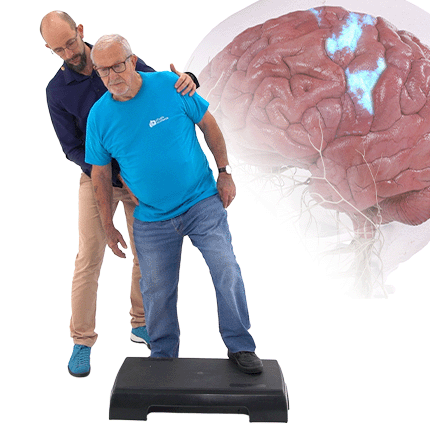
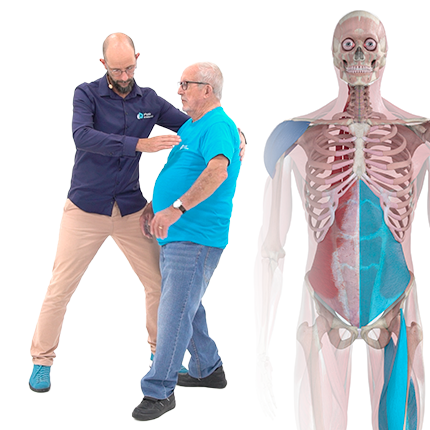
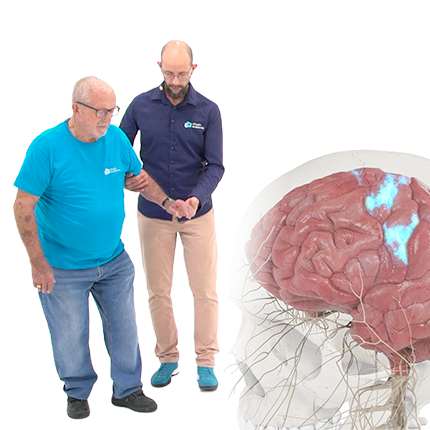
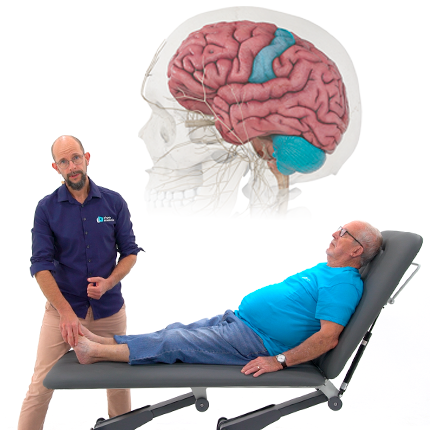
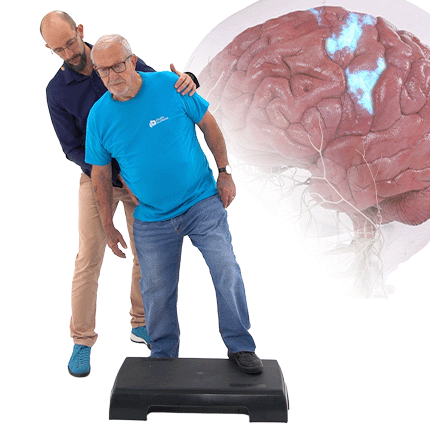
La formation repose sur des présentations théoriques dans laquelle les éléments sont présentées en s’appuyant sur des publications scientifiques diverses, avec une contribution importante des travaux de notre propre équipe de recherche. Après chaque synthèse théorique, des illustrations pratiques sont présentées avec une personne âgée.
Prérequis
Cette formation est principalement adressée aux masseurs-kinésithérapeutes.
Programme de Formation
QCM : Test de connaissance
- Testez-vous Passez ce QCM pour évaluer votre niveau avant formation.
INTRODUCTION
- Introduction • 3 min 05 s
REPÉRAGE DE LA FRAGILITÉ
- QCM début de chapitre
- Repérage de la fragilité • 6 min 52 s
- QCM fin de chapitre
RAISONNER AVEC LE FRAIL’BESTEST
- Introduction • 10 min 03 s
- Contrôle postural statique • 31 min 08 s
- Quiz Formatif
- Contrôle moteur anticipatif • 54 min 30 s
- Contrôle moteur réactif • 5 min 58 s
- Locomotion boîterie • 5 min 27 s
- Locomotion complexe • 14 min 39 s
- Quiz Formatif
- Contraintes biomécaniques • 23 min 56 s
- Qualités métrologiques du Frail’Bestest • 10 min 03 s
- QCM fin de chapitre
REPÉRER UNE LITHIASE VESTIBULAIRE
- Repérer une lithiase vestibulaire • 14 min 15 s
- QCM fin de chapitre
PEUR DE LA CHUTE ET SYNDROME DE DÉSADAPTATION PSYCHO-MOTRICE
- QCM début de chapitre
- Peur de la chute et syndrome de désadaptation psycho-motrice • 29 min 55 s
- QCM fin de chapitre
CAS CLINIQUE
- Cas clinique • 29 min 55 s
- QCM fin de chapitre
CONCLUSION
- Perspectives et points récurrents • 18 min 33 s
- Conclusion de la formation • 5 min 17 s
QCM : réévaluez vos connaissances.
- test après formation Evaluez votre progression après la formation avec un QCM.
Support de cours & documentation
Support de cours
- La Méthodologie de Recherche PhysioAcademie.com - 30 pages Télécharger le document
- Support de cours : Repérage précoce de la fragilité et de la perte d’autonomie en gériatrie et prise en charge kinésithérapique - 94 pages Télécharger le document
Références scientifiques
- Assaiante et al., 2005. Development of Postural Control in Healthy Children: A Functional Approach. Neural Plasticity
- Bourrelier et al, 2020. Enhancement of Anticipatory Postural Adjustments by Virtual Reality in Older Adults with Cognitive and Motor Deficits: A Randomised Trial. Geriatrics (Basel)
- Bourrelier et al, 2021. Enhancement of Anticipatory Postural Adjustments by Virtual Reality in Older Adults with Cognitive and Motor Deficits: A Randomised Trial. Geriatrics (Basel)
- Bracco et al, 2023. Tango-therapy vs physical exercise in older people with dementia; a randomized controlled trial. BMC Geriatrics
- Brika et al. 2021. Sensory reweighting in frail aged adults: Are the balance deficiencies mainly compensated by visual or podal dependences? Neurosci Lett.
- Brika et al. 2024. Sensory profiles in older adults with orthopedic conditions during quiet stance: a cross-sectional study. uropean Review of Aging and Physical Activity
- Buyukturan et al., 2018. The Effect of Mulligan Mobilization Technique in Older Adults with Neck Pain: A Randomized Controlled, Double-Blind Study. Pain Research and Management
- Califano et al., 2025. Feasibility and safety of repositioning maneuvers for posterior semicircular canal BPPV (benign paroxysmal positional vertigo) in elderly over 80 years of age. European Archives of Oto-Rhino-Laryngology
- Carona et al., 2023. Psychotherapy by Reciprocal Inhibition: Wolpe's unique legacy to the evolution of cognitive–behavioural therapy. BJPsych Advances
- Chau et al., 2015. Prevalence of Vestibular Disorder in Older People Who Experience Dizziness. Frontiers in Neurology
- De Brito et al., 2014. Ability to sit and rise from the floor as a predictor of all-cause mortality. European Journal of Preventive Cardiology
- Desmurget et Grafton 2000. feedback control for fast reaching movements. Trends in cognitive sciences
- Duncan et al., 1990. Functional Reach: A new clinical Measure of balance. Journal of gerontology: Medical Sciences
- Freitas et al., 2021. Virtual Reality Exposure Treatment in Phobias: a Systematic Review. Psychiatric Quarterly
- Fried et al. 2001. Frailty in older adults: evidence for a phenotype. The Journals of Gerontology. Series A, Biological Sciences and Medical Sciences
- Fujitani et al. 2025, Single exposure to optokinetic stimulation through virtual reality decreases reliance on visual inputs for posture control. Journal of Physical Therapy Science
- Gallivan et al, 2018. Decision-making in sensorimotor control. Nat Rev Neurosci
- Gottlieb et al., 2023. Head impulse, nystagmus, and test of skew examination for diagnosing central causes of acute vestibular syndrome. Cochrane Database of Systematic Review
- Hayashi et al. 2025. Effects of subjective visual verticality and visual dependence on balance function in older adults using a smartphone-based virtual reality system. Perception
- Hill et al., 2024. The influence of false interoceptive feedback on emotional state and balance responses to height-induced postural threat. Biological Psychology
- Horak et al. 2009. The Balance Evaluation Systems Test (BESTest) to Differentiate Balance Deficits. Physical therapy.
- Horn et al. 2015. Measurement Characteristics and Clinical Utility of the Clinical Test of Sensory Interaction on Balance (CTSIB) and Modified CTSIB in Individuals With Vestibular Dysfunction. Arch Phys Med Rehabil
- Hou et al., 2019. Effect of Protein Supplementation Combined With Resistance Training on Muscle Mass, Strength and Function in the Elderly: A Systematic Review and Meta-Analysis. The Journal of nutrition, health and aging
- Jones 1999. A 30-s Chair-Stand Test as a Measure of Lower Body Strength in Community-Residing Older Adults. Research Quarterly for Exercise and Sport
- Kanekar and Aruin, 2015. Improvement of anticipatory postural adjustments for balance control: effect of a single training session. Journal of Electromyography and Kinesiology
- Karvelas and Alahi, 2023. White Matter Hyperintensities: Complex Predictor of Complex Outcomes. Journal of the American Heart Association
- Kubicki et al, 2012a. Delayed postural control during self-generated perturbations in the frail older adults. Clinical Interventions in Aging
- Kubicki et al, 2012b. Practice-Related Improvements in Postural Control During Rapid Arm Movement in Older Adults: A Preliminary Study. Journal of Gerontology
- Kubicki et al, 2014. Motor-prediction improvements after virtual rehabilitation in geriatrics: Frail patients reveal different learning curves for movement and postural control. Clinical Neurophysiology
- Kubicki et al, 2017. The Early Indicators of Functional Decrease in Mild Cognitive Impairment. Frontiers in Aging Neuroscience
- Kubicki et al. 2020. The Frail’BESTest. An adaptation of the “Balance Evaluation System Test” for frail older adults. Description, internal consistency and inter-rater reliability. Clinical interventions in aging.
- Kubicki et al. 2021. The Frail'BESTest: an adaptation of the "balance evaluation system test" for frail older adults; Concurrent validity, responsiveness, validity for fall prediction and detection of slower walkers. European review of aging and physical activity.
- Kubicki et al., 2020. The Frail’BESTest. An adaptation of the “Balance Evaluation System Test” for frail older adults. Description, internal consistency and inter-rater reliability. Clinical Interventions in Aging.
- Kubicki et al., 2021. The Frail'BESTest: an adaptation of the "balance evaluation system test" for frail older adults; Concurrent validity, responsiveness, validity for fall prediction and detection of slower walkers. Eur Rev Aging Phys Act.
- Massion, 1992. Movement, posture and equilibrium: Interaction and coordination. Progress in Neurobiology
- Middleton et al., 2015. Walking Speed: The Functional Vital Sign. Journal of Aging and Physical Activity
- Middleton et al., 2015. Walking Speed: The Functional Vital Sign. Journal of Aging and Physical Activity
- Müller et al., 2022. Dizziness and benign paroxysmal positional vertigo among retirement home residents: a cross-sectional descriptive and interventional study. BMC Geriatrics.
- Okubo et al., 2021. Stepping impairment and falls in older adults: A systematic review and meta-analysis of volitional and reactive step tests. Ageing Research Reviews
- Ougrin D. 2011. Efficacy of exposure versus cognitive therapy in anxiety disorders: systematic review and meta-analysis. BMC Psychiatry
- Saimpont et al, 2010. Aging affects the mental simulation/planning of the "rising from the floor" sequence. Archives of Gerontology and Geriatrics
- Swain, 2023. Diagnostic Criteria of Benign Paroxysmal Positional Vertigo. Matrix Science Medica
- Totilienė Met al. Impaired Subjective Visual Vertical and Increased Visual Dependence in Older Adults With Falls. Front Aging Neurosci. 2021;13:667608
- Valenzuela et al, Effects of physical exercise on physical function in older adults in residential care: a systematic review and network meta-analysis of randomised controlled trials. Lancet Healthy Longev. 2023
- Zhang et al 2014, Investigating the Role of Backward Walking Therapy in Alleviating Plantar Pressure of Patients With Diabetic Peripheral Neuropathy. Archives of Physical Medicine and Rehabilitation
Découvrez toutes les formations de Alexandre KUBICKI
Raisonnement clinique en rééducation gériatrique
Alexandre KUBICKI
Plus d'infos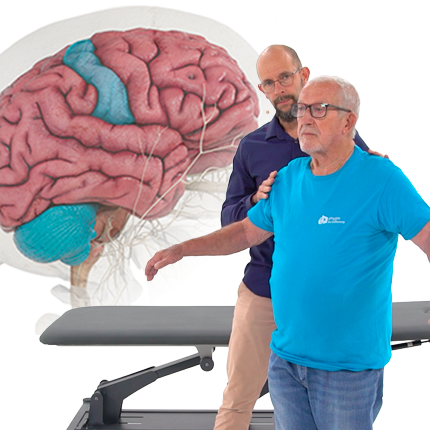
-
Soumis le
Repérage précoce de la fragilité et de la perte d'autonomie en gériatrie et prise en charge kinésithérapiqueInterressant, a permis d'approfondir les connaissances. -
Soumis le
reperage précoce de la fragilitéexcellente formation détaillée qui explore parfaitement bien les items et l'interprétation du test equimog. Formateur très pertinent. -
Soumis le
Repérage précoce de la fragilité et de la perte de l'autonomie en gériatrieFormation dense mais complète -
Soumis le
BienBien -
Soumis le
Repérage précoce de la fragilité et de la perte d'autonomie en gériatrie et prise en charge kinésithérapiqueFormation intéressante , avec une approche complète de tous les systèmes du corps humain pour la gestion de l'équilibre et de l'évaluation de la prise en charge thérapeutique de la personne âgée .
J ai appris des éléments dont je ne percevait pas l'utilité en rééducation adapté à la personne âgée Merci -
Soumis le
mkdeformation très claire -
Soumis le
repérage précise de la fragilite et de la perte de l autonomie en getiatrieinstructeur excellent -
Soumis le
Repérage précoce de la fragilité et de la perte d'autonomie en gériatrie et prise en charge kinésithérapiqueContenu clair et pratico-pratique -
Soumis le
Formation gériatrieTrès bonne formation -
Soumis le
Masseur-kinésithérapeuteBonne qualité du formateur -
Soumis le
KinésithérapeuteTrès bonne formation. Explications claires et compréhensible pour la prise en charge des personnes âgées. Données récentes .
Exercices pratiques. Explication détaillée de la mise en œuvre de Frail Best test .
Merci Alexandre et Jean Pierre. -
Soumis le
CompletTrès conscis
Exemple concret
Facile d'accès -
Soumis le
Masseur-KinésithérapeuteApproche scientifique et qualité du formateur. -
Soumis le
GériatrieExcellente approche thérapeutique. -
Soumis le
Repérage précoce de la fragilité et de la perte d autonomie en gériatrie et prise en charge kinésithérapieTrès bonne formation -
Soumis le
Repérage précoce de la fragilité et de la perte d autonomie en gériatrie et prise en charge kinésithérapieTrès bonne formation